The Dutch speed skating obsession is not just an Olympic medal story. It is the rare case where a country’s landscape, winter culture, sporting infrastructure, and national imagination all point toward the same sheet of ice. The Netherlands does not dominate speed skating by accident. Its success grew from a long relationship with frozen canals, local races, technical coaching, packed arenas, and a public that understands lap times the way other countries understand batting averages or penalty kicks. At the Winter Olympics, that culture has become one of the most reliable medal engines in modern sport: before the 2026 Winter Games, the International Skating Union credited the Netherlands with 48 Olympic speed skating gold medals, far ahead of the United States and Norway.
Frozen Canals Made Skating Feel Dutch Before It Felt Olympic
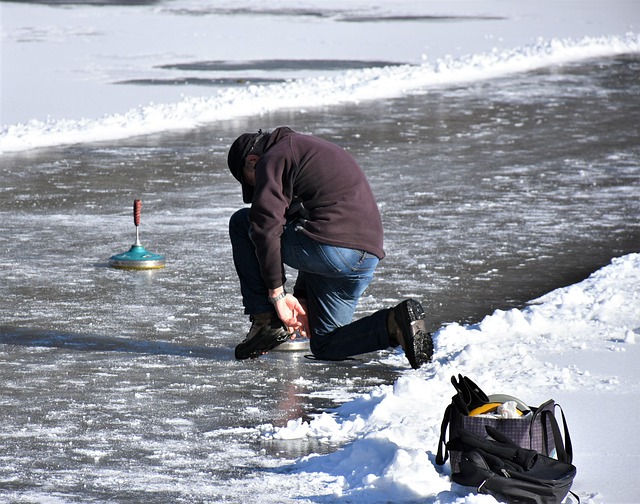
Speed skating in the Netherlands begins long before the Olympic oval. It starts with geography. A flat country full of canals, lakes, waterways, and cold-weather memory gave skating a natural place in Dutch life. When winter froze the water, skating was not only sport. It was travel, recreation, community, and identity.
The clearest expression of that culture is the Elfstedentocht, the “Eleven Cities Tour” in Friesland. The official event began in 1909 and has been held only fifteen times, because the natural ice must be strong enough across the route. The course stretches nearly 200 kilometers through eleven Frisian cities, turning skating into endurance, weather watching, local pride, and national anticipation.
That matters because it explains why Dutch speed skating feels different from a country simply funding an Olympic program. The sport already had emotional roots. The Olympics gave those roots a global scoreboard. A Dutch skater winning on the oval is not detached from ordinary skating culture; it is connected to a broader national habit of seeing ice as a public stage.
The Elfstedentocht also shows why Dutch skating carries nostalgia as well as competition. The race has not been held since 1997, but its absence has only increased its cultural weight. When the ice begins to look promising, the Netherlands does not merely discuss weather. It begins imagining a national event.
The Dutch Speed Skating Obsession Became an Olympic Medal Machine
Once speed skating moved indoors and into purpose-built arenas, the Netherlands had the cultural base to turn tradition into system. The country built elite coaching structures, professional teams, technical expertise, and deep competition at home. Dutch skaters do not simply appear every four years. They survive an internal standard that can be as demanding as the Olympic field itself.
That depth is visible in the medal record. The Netherlands has been described by the ISU as the “undisputed heavyweight champion” of long-track speed skating, and the gap is not subtle. Ahead of Milano Cortina 2026, Dutch skaters had 48 Olympic gold medals in the sport, compared with 30 for the United States and 28 for Norway.
Individual champions turned that system into familiar Olympic names. Ireen Wüst became one of the defining Olympic speed skaters of the modern era, winning gold across multiple Games and carrying Dutch excellence through several Olympic cycles. Olympics.com notes that the Netherlands has long been the dominant force in speed skating, and Wüst’s career fits directly inside that national pattern. Sven Kramer became another central figure, especially in the longer distances, with Olympics.com describing him as the most decorated speed skater in Winter Olympic history.
The Dutch edge is not only about producing one star at a time. It is about creating a competitive environment where medal contenders push each other before they ever reach the Games. In some countries, speed skating becomes visible only when the Olympics begin. In the Netherlands, it has a domestic audience, a technical vocabulary, commercial teams, and expectations that follow athletes all season.
That expectation can be heavy, but it is also part of the machine. Dutch skaters grow up in a country where the sport is legible. The difference between a great split and a fading lap is not a mystery to the public. That kind of attention creates pressure, but it also gives the sport a status most Winter Olympic disciplines never receive.
Why the Netherlands Owns the Olympic Oval
The legacy of Dutch speed skating is not simply that the Netherlands wins. It is that the country has made one Winter Olympic sport feel like a national specialty at a scale few countries can match. Norway has cross-country skiing. Canada has hockey. The Netherlands has the long-track oval.
That identity became especially clear in the modern Olympic era. Dutch strength extends across distances, genders, and generations. It has included sprint specialists, all-around champions, long-distance greats, team pursuit success, and increasingly meaningful short-track achievements. Olympics.com highlighted the Netherlands’ long-running dominance in the women’s 3000m, noting that Dutch skaters had won gold in four of the previous five Winter Olympics in that event heading into Milano Cortina 2026.
The obsession also gives speed skating a different cultural status inside the Netherlands than it has almost anywhere else. In many countries, Olympic speed skating is a temporary fascination. In the Netherlands, it is part of winter memory, television culture, local history, and national sporting identity. The Dutch do not need the Olympics to tell them speed skating matters. The Olympics simply show the rest of the world how much it does.
That is why the Dutch speed skating obsession remains one of the strongest national-sport connections in Olympic history. It begins on natural ice, runs through local tradition, hardens inside elite training systems, and arrives at the Games as something larger than medal ambition. The oval is only the final surface. The story behind it is a country that learned to see ice as part of itself.